← Back to all events
immersive installationGood bet

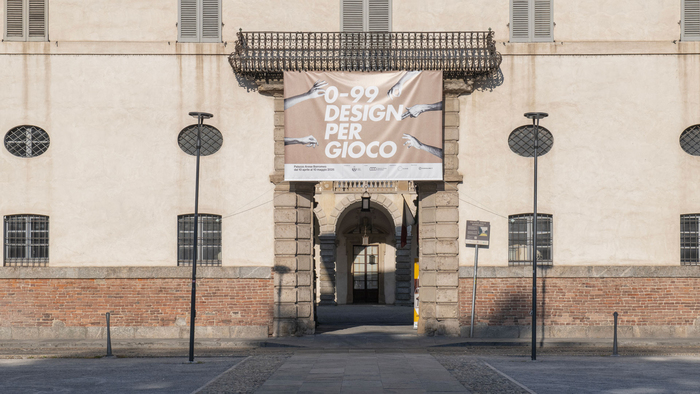
0-99. Design per gioco

Palazzo Arese Borromeo

Via Borromeo, 41, Cesano Maderno, Milano

20-26 April 2026· Other
Schedule

Open now (Milan time)
  • Mon10:00 - 13:00Exhibition15:00 - 18:00Exhibition
  • Tue10:00 - 13:00Exhibition15:00 - 18:00Exhibition
  • Today10:00 - 13:00Exhibition15:00 - 18:00Exhibition
  • Thu10:00 - 13:00Exhibition15:00 - 18:00Exhibition
  • Fri10:00 - 13:00Exhibition15:00 - 18:00Exhibition
  • Sat10:00 - 13:00Exhibition15:00 - 18:00Exhibition
  • Sun10:00 - 13:00Exhibition15:00 - 18:00Exhibition

Admission: full €5, reduced €3 During the Design Week 3€

Board games have accompanied humanity for thousands of years, crossing eras and continents. Born before books, they have always been a way to learn, imagine, compete, and stay together. The exhibition 0-99. Design per gioco presents the board game as a cultural object and an invention capable of expressing the identities and visions of people around the world through rules, pieces, and game boards. Promoted by the Municipality of Cesano Maderno , the exhibition is hosted f rom 10 April to 10 May 2026 at Palazzo Arese Borromeo . The curatorship of 0-99. Design per gioco is entrusted to Cristian Confalonieri , co founder of Studiolabo and Fuorisalone.it, game designer and co author, together with Andrea Cuman, of the Atlante dei giochi da tavolo (TOPIC Edizioni, 2024). The volume – one of the most comprehensive mappings of board games worldwide – serves as the scientific reference for the exhibition. The concept and co curatorship are by Alessia Interlandi , founder of in.circle, a consultancy firm specializing in strategic communication and organization of exhibitions and curatorial projects. “An exhibition on board games is relevant because it addresses a cultural object that is both widespread and beneficial to our society. The table is a miniature public space,” Confalonieri explains , “where materials, signs, and rules shape a way of being together. This is why games speak to everyone. Board games are design that becomes relationship, rules that turn into shared experience – a technology of coexistence: they coordinate conflict, cooperation, and negotiation. In their analog nature, they offer an antidote to digital friction”. The exhibition itinerary 0-99. Design per gioco retraces the evolution of the board game, from its earliest origins to contemporary projects and into the realm of game design. Along the way, visitors will encounter faithful reproductions of ancient games, oversized versions, and limited edition or collectible pieces . The exhibition opens with thirty ancient games from around the world—from the Royal Game of Ur to Go, from Chess to Dominoes, including playing cards and Tombola – which testify to the millennia old origins of board games. The exhibition continues with classic games – the great titles of the twentieth century – from Cluedo to Forza 4, from Monopoli to Risiko, the latter presented in a giant, fully playable 90 square meter version. These are symbols of the expansion of the gaming market starting in the 1970s. Designer and brand interpretations are also featured: the Carrom table by Vismara Design; the steel Chess set designed by architect Gianfranco Frattini; the Backgammon rug by architect and artist Valeria Molinari; the wooden and leather Battleship set produced by Pinetti; and Pineider’s Game of the Goose. At the heart of the exhibition, the focus on game design highlights the creative, design, and artisanal processes that give shape to a board game, delving into the work of several authors – starting with Alex Randolph , considered a key figure in the history of the field. It was Randolph who introduced the practice of placing the author’s name on game boxes. Two rooms are dedicated to him, presenting his life, theories, and works, including the screening of the documentary Alex Randolph, Game Director by Andrea Angiolino, directed by Luca Bitonte (Lucca Crea, 2022). The installation The Game Designer’s Desk is entrusted to Spartaco Albertarelli , one of the most important and long standing Italian game designers, and is presented in dialogue with the desk of Pierluigi Ghianda . Belonging to the master cabinetmaker of Italian design, the desk is now part of the permanent collection at Palazzo Arese Borromeo, thanks to a donation from his daughters to the Municipality of Cesano Maderno. Throughout his career, Ghianda collaborated with some of the most renowned designers and architects of the twentieth century – from Gae Aulenti to the Castiglioni brothers, from Gianfranco Frattini to Gio Ponti and Ettore Sottsass – creating furniture and objects of exceptional craftsmanship. Alongside this production, he also explored a more playful dimension, designing refined wooden objects such as La Scatola dei Giochi for Pomellato, which will be on display: a precious pear wood box produced in only 300 copies. The exhibition continues with modern games , which have driven the new renaissance of board gaming since the 1990s, presented here in oversized, celebratory, or collectible editions . Within this section is Contemporary Chess – A Game Without Thrones . Lorenzo Rimini’s project reimagines the visual identity of chess starting from a radical question: what happens if we remove the king and queen from the board? Rimini does not change the rules, only the imagery: no black and white; the two sides are distinguished by shape (circle and square), and the pieces no longer represent social or religious figures but instead their freedom of movement. Geometry becomes the language of the game, and the king – reinterpreted as a fragile piece – reveals how visual systems influence our ways of thinking, power structures, and hierarchies. The exhibition also investigates the impact of artificial intelligence on game design : what is the future of this artisanal craft? On display is memorIA, an artistic game developed using AI by Studiolabo and Silvia Badalotti – photographer, prompt designer, and image expert – to explore future applications in the artistic and creative fields. The Ludoteca The best way to understand a game is to play it. For this reason, beyond the bookshop, the exhibition includes The Ludoteca, a true Game Room, created with the support of the associations Board Game Society and La Casa dei Giochi. Here, visitors are invited to stop, choose from the available titles, and play together. Oversized games are available, selected from the most representative titles of the contemporary gaming landscape. Each game is part of the list of 100 essential titles for understanding what a board game is, as proposed by the Atlante dei giochi da tavolo . The Game Library also hosts a “show within the show” dedicated to the illustrations of Marta Signori : essential images that condense complex worlds and demonstrate how the gaming experience is also a matter of perception design – rhythm, atmosphere, recognizability. Collaborations and Contributions The exhibition is made possible thanks to the support of numerous organizations in the sector, which have provided their creations and expertise, offering a fundamental contribution to the installation: Ares Games, BLOB, Condiviso, Cranio Creations, Demoela, Kaleidos Games, La Casa dei Giochi, Lucca Crea, Ludendo Docere, Ludo Labo, Oliphante, Pineider, Pinetti, Rai Radio 3, RaiPlay Sound, Studiogiochi, SAZ Italia, TOPIC Edizioni, Vismara Design . Special thanks also to the authors of the board games on display: Spartaco Albertarelli, Andrea Angiolino, Silvia Badalotti, Luca Bellini, Luca Borsa, Tommaso di Battista, Carlo Lanzavecchia, Simone Luciani, Walter Obert, Emiliano Sciarra.

Gallery

Brands

FALPER Flagship Store · Faber, FRANKE · Planika

Categories

ArchitectureArtBathroomExteriorsFashion and jewelsFurnitureInstallationsKitchenProduct DesignSpecial materialsSustainabilityTechnology